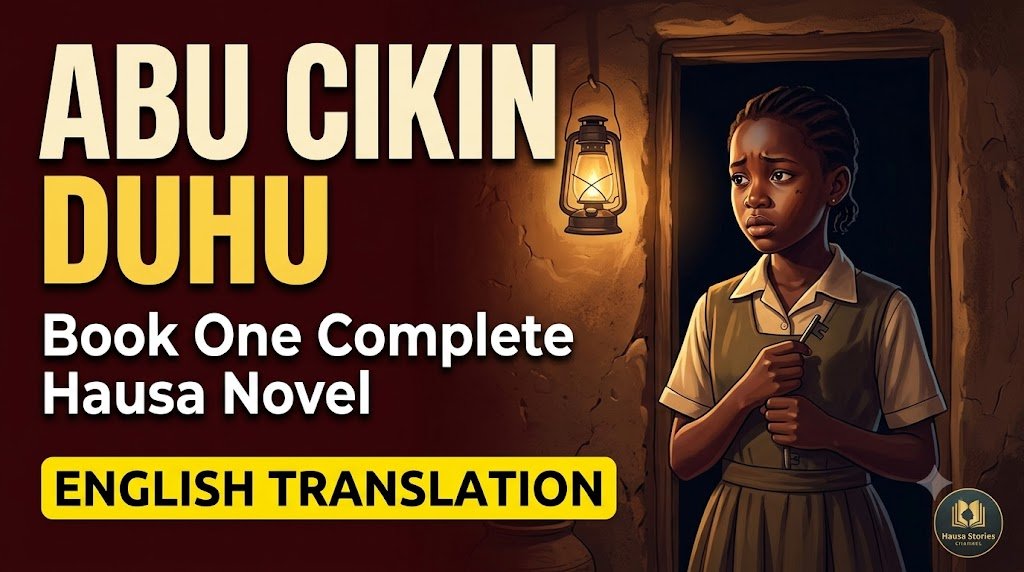
Abu Cikin Duhu Book One Complete Hausa Novel: English Translation & Summary
Welcome to the English translation and chapter overview of Abu Cikin Duhu Book One Complete Hausa Novel. This story explores the life of Abu, a young schoolgirl in a humble household, who navigates family tension, financial poverty, and the harsh traditional views of her grandmother, Asabe.
Below is the translation and story breakdown of this segment.
Story Narrative & English Translation
Domestic Tension & Asabe’s Anger
Even from the outer entrance (soro) of their home, Abu could hear the harsh, shouting voice of Asabe—her paternal grandmother—spewing insults.
Without stepping fully inside, Abu knew that Asabe was directing her anger toward her mother (Inna). This had become a constant routine; ever since childhood, Abu had grown accustomed to her grandmother’s bitter outbursts. Almost every morning, Asabe’s noisy arguments woke the entire household.
On this particular day, Asabe was furious over the firewood used for cooking.
Exhausted, hungry, and thirsty from walking all the way back from school under the hot sun without breakfast or transport fare, Abu stepped into the compound with a heavy heart. Her return did not stop Asabe’s barrage of complaints.
Inna calmly tried to explain herself at the hearth: “Mother, it wasn’t much wood. I only used a little to make morning porridge (koko), and now I am making a small batch of steamed grain (danbun tsaki) so the children have something to eat when they return. There are only four small pieces left. If you need warm water, let me combine the glowing coals so the water heats up and you can bathe.”
“Greetings to you, greeted mother of daughters!” Asabe sneered sarcastically. “You only care about your daughters’ stomachs and making sure they get fed. Meanwhile, my son went out on an empty stomach without caring about my needs! The easy part for you is that you only have girls in front of you. Despite all the public ridicule about having no boys, you keep giving birth to girls—one after another, day after day!”
Asabe continued ranting: “Every day you get pregnant and pour girls into this house—today it’s hair braiding, tomorrow henna, next day detergent expenses! How can he save money when their demands keep growing? He goes out daily to struggle with no male child to support him. If you had borne sons, he would hope for help once his strength fades. Instead, look at this one—spending money on Western education (boko) that holds no value for a female!”
Abu’s Resilience
Abu listened silently as she took off her worn-out school shoes. The shoes were completely faded from the long daily trek in the heat because the family could not afford new ones.
Despite her young age, Abu was bright and determined. She had consistently succeeded in her studies and was now in Senior Secondary 6 (SS3), preparing for her final examinations.
Her grandmother continuously pressured her father to marry her off as soon as she turned fifteen, noting that many of her peers were already married and settled in their husbands’ homes.
Asabe turned her anger directly to Abu: “And you, you hypocrite! Staring at me with wide eyes! It’s pure disrespect and lack of upbringing from your mother. When an elder speaks, the children stare blankly because of the disrespect inherited from their mother!”
Abu pursed her lips in quiet frustration over the constant emotional abuse her mother endured. Asabe often tried to force Abu’s father (Abba) to divorce Inna or take a second wife who could bear him sons.
Abu walked over to the cooking area and gently offered to take over. “Inna, let me fan the fire while you rest. I know you’ve been working since morning.”
Inna tried to turn her face away to hide her tears—tears brought on by the constant stigma of bearing only female children. “Leave it, Yar Mairo,” Inna said softly, calling her by her affectionate household nickname.
Abba’s Return
Moments later, Abba arrived carrying his work tools. Seeing his eldest daughter at the stove, he asked, “Yar Mairo, you just got back from school and you’re already at the stove?”
“Welcome home, Abba,” Abu greeted, stepping forward to take the small bag from his hand.
As Abu went to set the bag inside, Asabe barked, “What are you rushing into the room with? What is in that bag?”
Abba sighed softly. “Mother, it’s just a little flour and dried okra so we can prepare a simple meal tonight. I couldn’t make any money today. Everyone I worked for asked to pay on credit.”
He then knelt down respectfully before his mother. “Good evening, Umma. How is the house?”
“It is not well!” Asabe snapped. “I couldn’t even get warm water to bathe. I said I couldn’t bathe early in the morning, and your wife went ahead and burnt through all the firewood for her own cooking without setting aside water for me!”
Abba bowed his head quietly and replied, “I am sorry, Umma. Please forgive us.”
Key Character Overview
| Character | Role & Description |
| Abu (Yar Mairo) | The eldest daughter; an ambitious, resilient SS3 student struggling against poverty and family pressure. |
| Inna | Abu’s mother; a patient woman constantly ridiculed by her mother-in-law for having only female children. |
| Asabe | Abu’s harsh grandmother; holds traditional views, favors male children, and dislikes Western education for girls. |
| Abba | Abu’s hard-working, soft-spoken father who struggles financially to support his household. |
Major Themes in the Story
-
Preference for Male Offspring: The narrative highlights the traditional bias and societal pressure surrounding male heirship in some communities.
-
Value of Female Education: Abu’s dedication to her schooling stands as a central conflict against her grandmother’s desire for early marriage.
-
Poverty and Domestic Resilience: The family’s daily struggles with basic needs like firewood, food, and shoes demonstrate their perseverance.
Frequently Asked Questions (FAQs)
What is the main conflict in Abu Cikin Duhu Book One?
The story highlights the domestic friction caused by Asabe’s disdain for Abu’s mother for having only female children, as well as her opposition to Abu’s education.
What grade is Abu in during Chapter 1?
Abu is in her final year of secondary school (SS6 / SS3), preparing to finish her studies despite family financial hardship.