The Supreme Court of Nigeria has delivered one of the most defining judgments of the year, as it voided President Tinubu’s presidential pardon and upheld the death sentence of Maryam Sanda, the woman convicted of murdering her husband, Bilyaminu Bello, in 2017. The ruling, now trending nationwide, has sparked intense discussions on justice, executive power, and the correct use of presidential clemency.
In its decision, the apex court declared that the presidential pardon granted to Sanda “did not follow due constitutional process.” The court emphasized that while the President has the power to grant mercy, such powers cannot override a valid court judgment without proper legal justification. By reinstating the death sentence, the Supreme Court made it clear that executive authority must respect judicial finality, especially in capital cases.
Maryam Sanda’s case has been one of Nigeria’s most followed murder trials. She was convicted in 2020 after evidence showed she fatally stabbed her husband during a domestic dispute. The Court of Appeal later upheld the ruling. Her conviction became a national talking point, symbolizing issues of domestic violence, privilege, and fairness in the justice system.
The presidential pardon earlier granted to her caused shock across the country, with many Nigerians questioning why her name appeared on the pardon list when her conviction had gone through all legal stages. This confusion was settled when the Supreme Court ruled that the pardon was “invalid,” stressing that clemency must be exercised responsibly and within the law.
Legal experts have praised the judgment, saying it protects the integrity of the judiciary. Many believe the decision sends a strong message that justice cannot be bent for high-profile individuals, no matter the political atmosphere. Others argue that the ruling now forces Nigeria to take a deeper look at how presidential clemency is granted and monitored.
Public reactions remain mixed. Some Nigerians applaud the decision as justice restored for the victim and his family. Others feel the ruling reopens questions about the death penalty and its role in the country’s justice system. However, one thing is certain: the Supreme Court’s verdict will shape future debates on executive powers, constitutional law, and high-profile criminal cases.
The Maryam Sanda ruling now stands as a historic precedent. It reinforces that no individual is above the law, and that Nigeria’s judicial system remains firm in delivering justice, even in cases surrounded by controversy and political pressure.
Supreme Court Voids Tinubu’s Pardon, Reinstates Maryam Sanda’s Death Sentence – Full Breakdown of the Supreme Court Ruling
Maryam Sanda Supreme Court Ruling: Death Sentence Upheld After Pardon Overturned
 By Dt Gana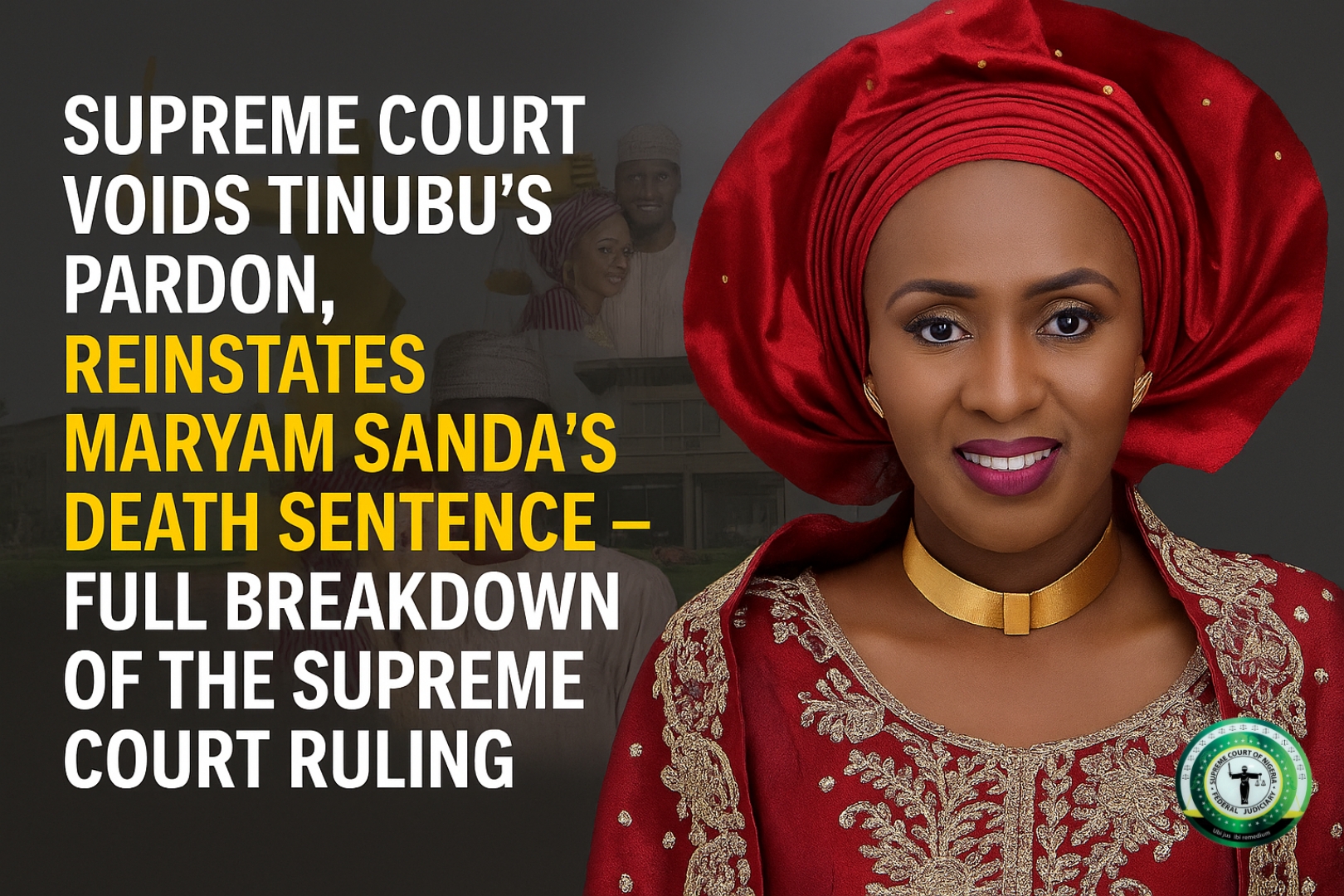
Maryam Sanda Supreme Court Ruling

Dt Gana
A dynamic blogger, strategic SEO expert, and versatile content creator delivering impactful digital narratives.
Add A Comment