
Hausa Language (Harshen Hausa): Meaning, History, and Why It Is One of Africa’s Most Spoken Languages
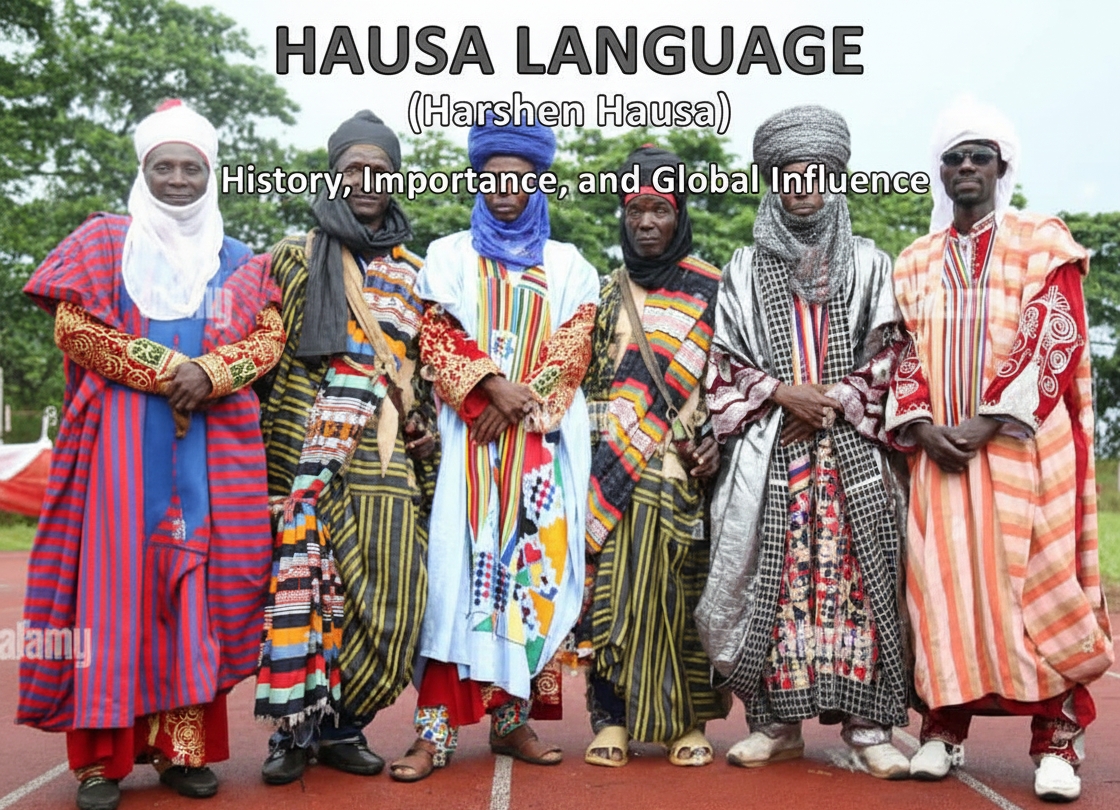
The Hausa language, known as Harshen Hausa, is one of the most widely spoken indigenous languages in Africa. It serves as a major lingua franca across West and Central Africa and plays a vital role in communication, culture, media, religion, and trade. With over 70 million native speakers and more than 30 million second-language speakers, Hausa is not just a language—it is a powerful cultural identity.
Origin and History of Harshen Hausa
Hausa belongs to the Chadic branch of the Afroasiatic language family. It originated in what is now Northern Nigeria and Southern Niger, particularly in ancient Hausa city-states such as Kano, Katsina, Zazzau (Zaria), Gobir, and Daura. Over centuries, Hausa spread through trade, Islamic scholarship, and migration, making it one of Africa’s most influential languages.
Before colonial times, Hausa was written using Ajami script (Arabic characters). Today, it is commonly written in Boko script (Latin alphabet), which helped standardize and expand literacy.
Where Hausa Is Spoken
Hausa is spoken in many countries, including:
- Nigeria (Northern states)
- Niger (official national language)
- Ghana, Cameroon, Chad, Sudan
- Parts of Benin, Togo, and Burkina Faso
Due to migration, Hausa-speaking communities also exist in Europe, the Middle East, and North America.
Importance of Hausa Language
The importance of Hausa cannot be overstated. It is:
- A language of unity in Northern Nigeria
- Widely used in radio, TV, and digital media
- A key language for Islamic teachings and sermons
- Used in commerce and cross-border trade
International broadcasters such as BBC Hausa, DW Hausa, VOA Hausa, and RFI Hausa use the language daily to reach millions, proving its global relevance.
Hausa in Media, Music, and Film
Hausa dominates Northern Nigeria’s entertainment industry. Kannywood, the Hausa-language film industry based in Kano, produces thousands of movies watched across Africa and beyond. Hausa music, poetry, and storytelling (tatsuniya) also preserve history and moral values.
On social media, Hausa content is rapidly growing, making Hausa SEO keywords highly valuable for bloggers, musicians, and digital creators.
Learning Hausa Language
Hausa is considered one of the easiest African languages to learn, especially because of its simple grammar structure. Many universities worldwide teach Hausa due to its political, cultural, and economic significance.
Common Hausa greetings include:
- Sannu – Hello
- Lafiya lau – I’m fine
- Na gode – Thank you
Why Hausa Language Matters Today
In today’s digital age, Harshen Hausa continues to grow online. Websites, blogs, YouTube channels, and podcasts in Hausa attract massive traffic. For SEO and content creators, Hausa language content offers high engagement, low competition, and strong audience loyalty.
Conclusion
The Hausa language (Harshen Hausa) is more than a means of communication—it is a bridge connecting millions of people across Africa and the world. Its rich history, cultural depth, and modern relevance make it one of the most powerful African languages today. Promoting and preserving Hausa is essential for cultural continuity and global understanding.
